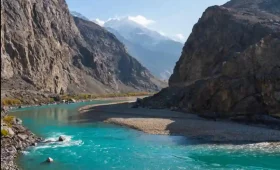
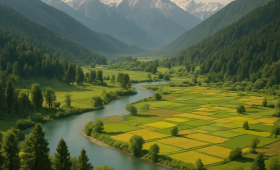
Gilgit Baltistan, a region renowned for its breathtaking landscapes and rich cultural heritage, holds a fascinating history that spans centuries. Understanding when and how this area became part of Pakistan involves delving into its vibrant past, from ancient times to the pivotal events of the mid-20th century. This article provides an in-depth overview of Gilgit Baltistan’s history, its cultural significance, and the key events that led to its integration into Pakistan.

The history of Gilgit Baltistan is as diverse as its terrain. For centuries, this region was a melting pot of various cultures and civilizations, each leaving an indelible mark on its landscape and people. It was a critical hub on the ancient Silk Road, facilitating trade and cultural exchanges between the East and the West. The region’s strategic location made it a coveted territory for various empires and kingdoms throughout history.
Ancient Influences and the Silk Road
In ancient times, Gilgit Baltistan was a vibrant crossroads for trade and cultural exchange. The region was home to diverse tribes and was significantly influenced by several powerful empires, including the Mauryan and Kushan Empires. These empires left behind not only historical records but also cultural and religious influences, notably the spread of Buddhism.
The Silk Road, a major trade route that connected the East and West, passed through Gilgit Baltistan. This facilitated not just the exchange of goods like silk and spices but also ideas and cultural practices. The presence of numerous monasteries and stupas across the region stands as a testament to its importance in the propagation of Buddhism and its role in global cultural exchanges.
Medieval Dynasties and Cultural Interactions
During the medieval period, Gilgit Baltistan witnessed the rise and fall of various local dynasties. These dynasties often engaged in power struggles with neighboring kingdoms, including the Tibetan Empire and the Islamic Caliphate. Each of these powers sought to exert influence over the region due to its strategic importance, leaving a lasting impact on its culture and history.
The interactions between these kingdoms and empires brought about a unique blend of cultural practices. Architectural styles, religious practices, and even culinary traditions of the region reflect this rich tapestry of historical influences. The region’s people adapted and integrated these diverse cultural elements, creating a distinct identity that endures to this day.
The Advent of British Influence
The 19th century marked a significant shift as British influence began to extend into the Indian subcontinent, reaching Gilgit-Baltistan. Recognizing the strategic significance of the region, the British established the Gilgit Agency in 1877 as part of their efforts to secure their northern frontier against potential rivals. This agency acted as a political and administrative unit under the indirect control of the British Indian Empire.
The British presence in Gilgit Baltistan was not just military but also administrative. They appointed local rulers, oversaw governance, and introduced infrastructural developments. This period laid the groundwork for modern political boundaries and administrative practices, setting the stage for the region’s eventual integration into Pakistan.
The Pivotal Moment: Accession to Pakistan
The Geopolitical Context of Partition
The year 1947 marked a pivotal moment in the history of the Indian subcontinent as the British decided to partition India into two independent states, India and Pakistan. This decision was driven by religious and political considerations, leading to widespread upheaval. The princely states, including the region of Jammu and Kashmir, were given the choice to join either country, putting the political future of Gilgit Baltistan in a delicate balance.
The partition brought about a massive reorganization of territories, resulting in significant demographic changes. This period was characterized by intense negotiations, political maneuvering, and, unfortunately, widespread violence. Gilgit-Baltistan, with its majority Muslim population, found itself at the heart of this geopolitical reshuffling.
The Gilgit Rebellion and Local Sentiments
Amidst the chaos of partition, the princely state of Jammu and Kashmir, which included Gilgit Baltistan, faced a critical decision. The Maharaja of Jammu and Kashmir, Hari Singh, initially chose to remain independent, a decision that was met with mixed reactions. However, the majority Muslim population of Gilgit Baltistan strongly favored joining Pakistan, reflecting the region’s cultural and religious affiliations.
In October 1947, a significant event known as the Gilgit Rebellion unfolded. The local population, along with the Gilgit Scouts, rose against the Maharaja’s rule and declared independence. This rebellion was driven by the desire for self-determination and alignment with Pakistan. The rebels established a provisional government and sought assistance from Pakistan, marking a decisive moment in the region’s history.
Formal Integration into Pakistan
Responding to the request for assistance, Pakistan sent military forces to support the newly formed government in Gilgit Baltistan. The region was formally integrated into Pakistan on November 1, 1947. This integration marked the beginning of a new chapter in Gilgit Baltistan’s history as it became part of the newly established nation of Pakistan.
The integration process was not without its challenges, involving negotiations and adjustments to align the region’s administration with that of Pakistan. Over the years, Gilgit Baltistan’s status within Pakistan has evolved, reflecting its unique cultural and historical identity within the broader framework of the nation.
Cultural Heritage of Gilgit Baltistan

Gilgit Baltistan is renowned not only for its political history but also for its rich and diverse cultural heritage. The region is home to a multitude of ethnic groups, each contributing to its vibrant cultural tapestry. The people of Gilgit Baltistan have preserved their traditions, including music, dance, and festivals, which reflect their unique identity and historical legacy.
Linguistic Diversity and Cultural Practices
The region boasts a remarkable diversity of languages, with Shina, Balti, Burushaski, and Wakhi being some of the prominent ones. Each language carries its own set of traditions, folklore, and oral histories, contributing to the cultural mosaic of Gilgit Baltistan. These languages are not just means of communication but are integral to the region’s identity and cultural expression.
Festivals such as the Shandur Polo Festival and the Jashn-e-Baharan (Spring Festival) are celebrated with great enthusiasm and fervor. These events showcase the region’s cultural richness and the unity among its diverse communities. They serve as platforms for the preservation of traditional sports, music, and dance, reinforcing a sense of community and shared heritage.
Architectural Heritage and Historical Monuments
Gilgit Baltistan is home to remarkable architectural marvels, including ancient forts and mosques that stand as testaments to its historical significance. The Baltit Fort and the Shigar Fort are prime examples of the region’s architectural heritage, blending traditional design with the natural beauty of their surroundings. These structures not only reflect the region’s historical importance but also the skill and artistry of its craftsmen.
Architectural sites continue to attract tourists and history enthusiasts from around the world. Preservation efforts are underway to maintain these structures, recognizing their value as symbols of the region’s rich past and cultural diversity. These sites offer a glimpse into the historical narrative of Gilgit-Baltistan, connecting the present to its storied past.
Cultural Resilience and Identity
The cultural heritage of Gilgit Baltistan is characterized by resilience and adaptability. Despite historical challenges and external influences, the people of the region have maintained their cultural identity and traditions. This resilience is evident in the preservation of traditional crafts, music, and dance forms that have been passed down through generations.
Efforts to document and promote the cultural heritage of Gilgit Baltistan are ongoing, with initiatives aimed at safeguarding intangible cultural practices. These efforts not only enrich the cultural landscape but also empower local communities by fostering pride in their heritage and encouraging cultural exchange with the broader world.
Conclusion: Gilgit Baltistan’s Journey
Gilgit Baltistan’s journey from a strategic region on the Silk Road to becoming part of Pakistan is a tale of resilience, cultural richness, and historical significance. Its history is a testament to the enduring spirit of its people and their ability to adapt to changing times while preserving their heritage. The region’s integration into Pakistan marked a new era, contributing to the nation’s diversity and cultural tapestry.
Today, Gilgit Baltistan stands as a vital part of Pakistan, playing a crucial role in the country’s socio-cultural and geopolitical landscape. Understanding its history not only enriches our knowledge of the region but also highlights the importance of preserving its unique identity for future generations. As we look to the future, Gilgit Baltistan’s story serves as a reminder of the enduring power of cultural heritage and the unifying force of shared history.
Q&A on Hunza’s Location:
Q1: Is Hunza part of Gilgit or Baltistan?
A1: Hunza is part of the Gilgit region. It is a mountainous valley located in the Gilgit-Baltistan area of Pakistan, situated in the northernmost part of the region.
Q2: What is the administrative division of Hunza?
A2: Hunza is a district within the Gilgit division of Gilgit-Baltistan. It is not specifically part of Baltistan but falls under the broader Gilgit-Baltistan region.
Q3: What are the main attractions of Hunza?
A3: Hunza is famous for its breathtaking landscapes, including snow-capped mountains, valleys, and historical sites. Some of its main attractions include Karimabad (the main town), Altit Fort, Baltit Fort, Eagle’s Nest, and Rakaposhi Peak.
Q4: Why is there confusion between Hunza being in Gilgit or Baltistan?
A4: The confusion arises because the region of Gilgit Baltistan itself includes both Gilgit and Baltistan areas, and Hunza is located in the Gilgit division, which sometimes leads to the assumption that it may be part of Baltistan.
Q5: How far is Hunza from Gilgit city?
A5: Hunza is approximately 100 kilometers (62 miles) away from Gilgit city, making it accessible by road and a popular tourist destination from Gilgit.
FAQ (Frequently Asked Questions)
Q1: Is Hunza in Gilgit or Baltistan?
Hunza is part of the Gilgit region of Gilgit Baltistan. It falls under the Gilgit division and is not part of Baltistan.
Q2: What is the significance of Hunza in Gilgit-Baltistan?
Hunza is one of the most popular and beautiful regions in Gilgit Baltistan, known for its scenic beauty, rich culture, and historical landmarks. It is often a major highlight for tourists visiting Gilgit-Baltistan.
Q3: Can Hunza be considered part of Baltistan?
No, Hunza is not considered part of Baltistan. While both Gilgit and Baltistan are part of the larger Gilgit-Baltistan region, Hunza is specifically in the Gilgit division.
Q4: What are the main towns in Hunza?
The main towns in Hunza are Karimabad, the district capital, and other smaller towns like Altit, Ganish, and Hopper. Karimabad is the most popular among tourists.
Q5: How is the culture of Hunza different from Baltistan?
While both Hunza and Baltistan share the cultural heritage of Gilgit Baltistan, they have distinct cultural identities. Hunza is known for its unique language (Burushaski), customs, and traditions. Baltistan, on the other hand, has a different language (Balti) and its own set of traditions influenced by Tibetan culture.